
Why Fabric Quality Matters More Than Price in Corporate & School Uniforms
Fabric quality in uniforms affects comfort, durability, safety, and long-term cost. Learn why quality matters more than price in corporate & school uniforms.
Amol NK
2/5/20265 min read


Why Fabric Quality Matters More Than Price in Corporate & School Uniforms
When organizations or schools plan uniforms, the first discussion almost always starts with price. Budgets are real, volumes are high, and decision-makers are under pressure to “optimize costs.” But after 25+ years of working closely with corporates, factories, schools, and uniform suppliers across India, I’ve seen the same pattern repeat itself: saving on fabric at the beginning almost always costs more in the long run.
Whether it’s corporate uniforms, custom T-shirt printing, or school uniform solutions, fabric quality is not a cosmetic choice—it directly affects comfort, durability, safety, brand image, and overall cost of ownership.
This article explains, from real-world experience, why fabric quality matters more than price and how decision-makers can evaluate uniforms beyond just the quotation figure.
The Most Common Buyer Mistake: Choosing Price Over Quality
In procurement meetings, the comparison often looks like this:
Vendor A: ₹50 cheaper per piece
Vendor B: Slightly higher price, “better fabric”
On paper, Vendor A looks like the obvious winner—especially when multiplied across hundreds or thousands of uniforms. But uniforms are not one-time-use items. They are worn daily, washed frequently, and expected to last months or even years.
The mistake is not choosing a lower price—it’s assuming all fabrics behave the same over time.
Why Buyers Focus on Price (And Why It Backfires)
Why price becomes the priority
Budget approvals and tender systems reward the lowest quote
Fabric differences are hard to judge visually
Uniforms are seen as “cost items,” not productivity tools
Decision-makers may not be end-users themselves
How it backfires
Faster wear and tear
Complaints from employees, parents, or students
Replacement orders much earlier than planned
Negative brand or institutional perception
Hidden costs in logistics, admin time, and reputation
In reality, cheap fabric doesn’t save money—it only delays the expense.
What “Fabric Quality” Actually Means (Beyond Marketing Terms)
Fabric quality is often misunderstood. It’s not about fancy names or buzzwords. It’s about measurable, functional attributes that determine how a uniform performs in daily life.
1. GSM (Grams per Square Meter)
GSM defines the fabric’s weight and density.
Too low GSM → fabric feels flimsy, transparent, wears out quickly
Too high GSM → heavy, uncomfortable in Indian climate
For corporate wear India and schools, the right GSM balances breathability and durability, not just thickness.
2. Yarn Quality
Good fabric starts with good yarn.
Long-staple yarns last longer and feel smoother
Low-quality yarns pill, roughen, and weaken after washes
In polo T-shirts for men or school uniforms, yarn quality decides whether the garment still looks professional after 3 months.
3. Weave & Knit Structure
Tight weave or knit = better strength and shape retention
Loose structure = stretching, sagging, distortion
This is critical in custom T-shirt printing, where poor fabric causes prints to crack or peel.
4. Fabric Finishing
Proper finishing ensures:
Color fastness
Reduced shrinkage
Skin-friendly feel
Skipping or reducing finishing steps is a common cost-cutting tactic—but it shows up after the first few washes.
Impact of Poor Fabric on People and Brand Image
On Employees
Uncomfortable uniforms lead to:
Sweating and irritation
Restricted movement
Lower confidence
When people are uncomfortable, productivity drops—even if subtly.
On Students
Children’s skin is more sensitive. Poor fabric can cause:
Rashes and itching
Excessive heat retention
Faster wear during play
For schools, this becomes a parent trust issue, not just a uniform issue.
On Brand & Institution Image
Uniforms are worn publicly—inside offices, factories, schools, and outside premises.
Faded colors, stretched collars, or cracked prints reflect directly on:
Company professionalism
School discipline standards
Overall credibility
Uniform fabric quality silently communicates standards.
Corporate Uniforms: Cost vs Comfort vs Productivity
In corporate and industrial environments, uniforms are worn 8–12 hours a day. This makes fabric choice a workplace decision, not a fashion one.
How quality fabric supports productivity
Better breathability reduces fatigue
Proper stretch improves mobility
Color stability maintains professional appearance
Organizations investing in good corporate uniforms often report:
Fewer replacement requests
Higher employee acceptance
Better brand presentation during audits or client visit
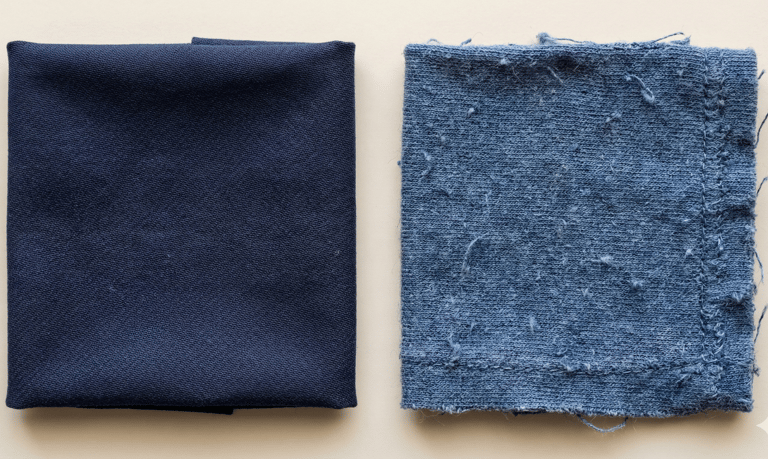
A ₹50–₹80 saving per T-shirt quickly disappears when replacements start within months.

School Uniforms: Safety, Skin Sensitivity & Durability
For schools, fabric decisions impact not just appearance but student well-being.
What quality fabric ensures
Non-irritating, breathable material
Resistance to frequent washing
Strength against daily wear, play, and movement
In school uniform solutions, durability is as important as comfort. Cheap fabric may look fine initially but often:
Loses shape quickly
Fades unevenly
Tears at stress points
This leads to unhappy parents and inconsistent student appearance.
The Long-Term Cost Comparison: Cheap vs Quality Fabric
Let’s look at a simplified real-world comparison:
Low-cost fabric uniforms
Lower initial cost
Replacement needed within 6–8 months
Higher complaint management
Re-order logistics and downtime
Quality fabric uniforms
Slightly higher initial cost
Last 12–24 months depending on use
Fewer complaints
Better consistency
Over a year or two, quality fabric almost always costs less per wear.
How to Identify Good Fabric Before Placing Bulk Orders
Decision-makers don’t need to be textile experts—but they do need a few practical checks.
Ask for fabric samples
Not just finished garments—ask for raw fabric swatches.
Check these basics
Feel: Does it soften after rubbing?
Stretch & recovery: Does it return to shape?
Transparency: Hold it against light
Stitch strength in sample garments
Ask the right questions
What is the GSM?
Is the fabric pre-shrunk?
What finishing process is used?
Suitable for how many wash cycles?
A genuine school uniform supplier or corporate uniform partner will answer confidently and transparently.
Fabric Quality & Custom T-Shirt Printing: A Critical Link
In custom T-shirt printing, fabric quality directly affects print quality.
Poor fabric leads to:
Print cracking
Ink bleeding
Uneven surfaces
High-quality fabric ensures:
Sharper prints
Longer print life
Better brand visibility
This is especially important for promotional events, seminars, and daily employee wear.
Expert Checklist for Corporates & Schools
Before finalizing any uniform order, review this checklist:
Fabric & Construction
✔ Appropriate GSM for usage
✔ Skin-friendly yarn
✔ Stable weave or knit
✔ Color fastness tested
Usage & Environment
✔ Suitable for Indian climate
✔ Comfortable for long hours
✔ Wash durability
Supplier Capability
✔ Transparent fabric details
✔ Consistency across batches
✔ Willingness to provide samples
Cost Perspective
✔ Cost per wear evaluated
✔ Replacement frequency estimated
✔ Long-term value prioritized
A Professional Insight to Close
After decades in this industry, one truth stands out clearly: uniforms are not an expense—they are an operational asset. When fabric quality is compromised to save a small amount upfront, the hidden costs surface later in the form of dissatisfaction, replacements, and damaged perception.
Whether it’s corporate wear in India, school uniform solutions, or custom T-shirt printing, quality fabric delivers value quietly but consistently—through comfort, durability, and trust.
Price is visible on the quotation.
Fabric quality reveals itself only after months of real use.
Smart decision-makers plan for the second part.




Yobala
BYK APPAREL
Nashik / Pune / Thane
Maharashtra
Contact
Newsletter
yobala369@gmail.com
bykapparel369@gmail.com
Whatsapp: 869 899 8691
© 2024. All rights reserved.